
The storm doesn't reach us.
When financial markets turn rough, a store's customers keep buying their everyday products. The fund's income follows consumption, not share prices.
Income that comes from customers, not tickers.
A listed share is repriced every trading session. Its value depends on the company's results, but also on investor sentiment, interest rates and capital flows. An online store has no share price: it has customers, orders and a margin.
Breakwater holds no listed shares and no bonds. The fund acquires e-commerce businesses directly, owns them outright and has them run end to end by TakeMyShop. Each store's revenue depends on its customers, its search visibility and the quality of its operations.
Returns follow the same logic. They come from profits paid out every year as dividends, not from selling at the right moment. The fund targets an annual dividend of 15% from year two, with upside potential once the portfolio reaches full run-rate.
Year one is a deployment year: acquisitions are made in sequence and niche stores are launched, with a projected dividend of around 8%. It reaches 15% from year two, once the acquired stores contribute over a full financial year.
A portfolio sheltered from the trading floor.
Source: Breakwater Capital. Non-binding targets.
Everyday purchases.
Home, beauty, pets, soft mobility: everyday spending that has nothing to do with the day's trading session.




Everyday purchases.
Home, beauty, pets, soft mobility: everyday spending that has nothing to do with the day's trading session.
What happens when markets turn rough.
The journey of one euro of revenue, from a customer's order to an investor's dividend.
Indices fall and prices swing from one day to the next. Portfolios exposed to listed markets see their value move in real time.
Meanwhile, customers keep ordering bed linen, beauty products and pet accessories. These purchases have nothing to do with the day's session.
Each store collects its sales. TakeMyShop handles orders, search visibility, customer service and logistics, without waiting for markets to settle.
The stores' profits flow up to the fund. No asset needs to be sold to realise them: they come from day-to-day operations.
The fund pays an annual dividend. The target return comes from the year's income, not from a bet on what the assets might be worth on a given day.

Storm outside, calm within.
A breakwater does not stop the storm. It keeps it away from the harbour. Breakwater applies the same idea to savings: part of a portfolio placed out of reach of market swings.
Protection also comes from how the portfolio is built. Two thirds of the fund are invested in established, already profitable stores that carry the recurring dividend. One third goes into building niche stores, which adds a dose of upside. No single asset carries the return on its own.
- —⅔ in established stores: the core of the yield
- —⅓ in niche creation: the upside potential
- —A spread of everyday consumer sectors
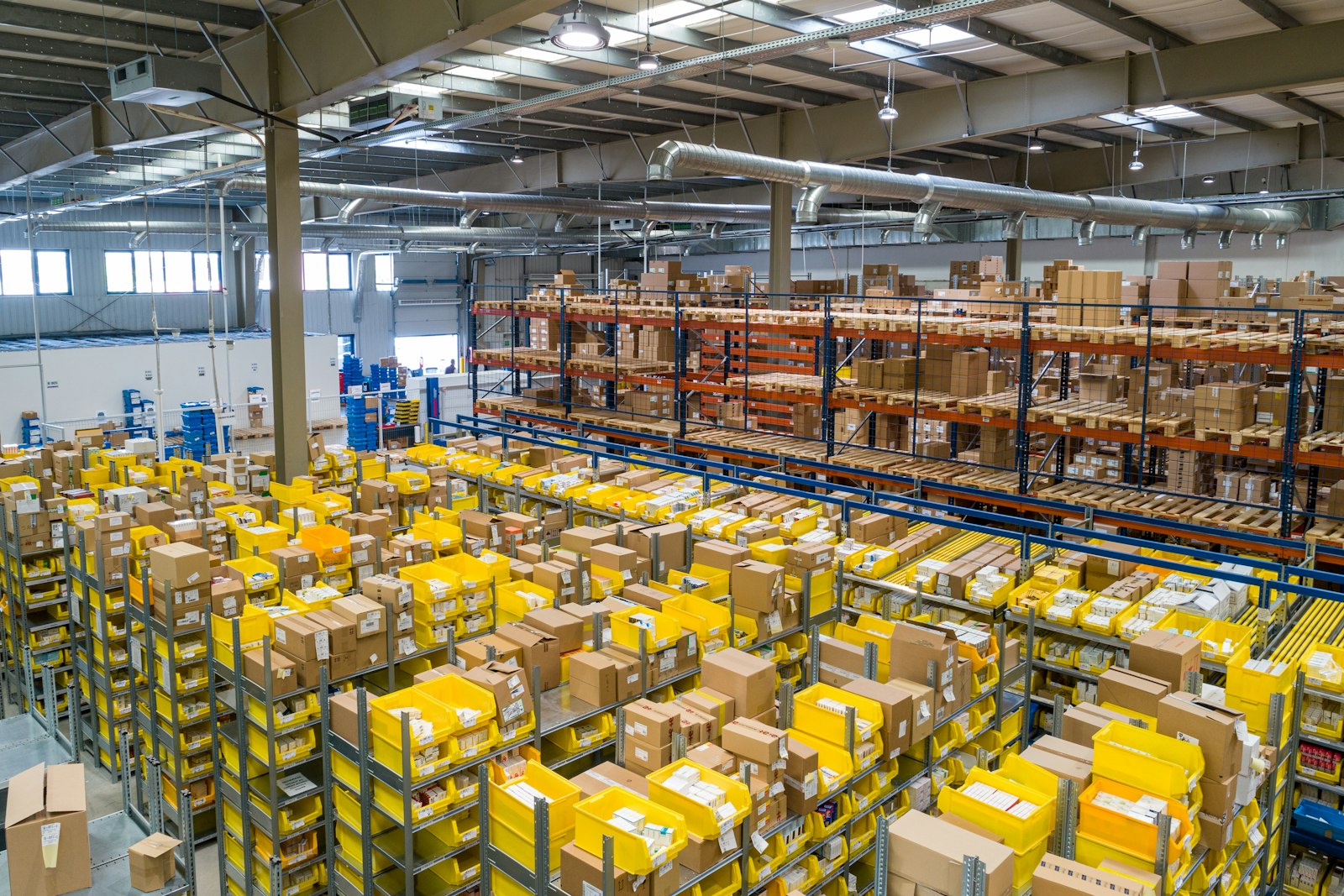
Stock, parcels and customers.
Behind every store in the fund lies a tangible business: listed products, orders packed and shipped, customers served. The asset's value shows in its sales and its margin, not in a share price.
This is what allows the fund to target a high, steady return backed by real, already profitable assets. The fund tracks its stores' operating metrics every month: revenue, margin, traffic, return rate and delivery times.
- —Income from actual sales
- —Metrics tracked every month
- —Operations entrusted to a specialist operator
Two exposures, two logics.
A store's income and a listed portfolio's income respond to different drivers.
| Driver | Listed equities | The fund's stores |
|---|---|---|
| Source of income | Company results and share prices | Sales made to customers |
| Market sentiment | Direct impact on value | No direct impact on revenue |
| Consumer spending | Indirect impact | Direct impact: the main driver we track |
| Quality of operations | Beyond the shareholder's reach | Managed daily by TakeMyShop |
| Form of return | Capital gain and dividend | Annual dividend paid from profits |
Qualitative comparison, for illustration only.
A store's value is built by its customers, not on a trading screen.
Uncorrelated, in practice.
Does uncorrelated mean risk-free?
No. Being uncorrelated describes the nature of the income: it depends on consumer spending and on how the stores are run, not on share prices. Like any unlisted investment, the fund carries a risk of capital loss.
What if consumer spending slows down?
The stores' revenue may fall. The portfolio spreads that exposure across many stores and a range of everyday consumer sectors: home, beauty, pets, soft mobility, green, wellness, garden, sport & outdoor.
Why does the 15% dividend start in year two?
Year one is a deployment year: stores are acquired progressively and do not all contribute over a full financial year. The projected dividend is around 8% in Y1, then 15% from Y2.
Why doesn't the return depend on a sale?
Because it comes from profits distributed every year. An opportunistic sale remains possible, but the target return does not rely on it.
Does the fund hold listed securities?
No. It owns online stores directly, not listed shares or bonds.

A still under-exploited asset class.
Uncorrelated with the markets, e-commerce is also a market where structured buyers remain scarce. That is where the entry price is made.
Being uncorrelated describes the nature of the income; it is not a guarantee. Investing involves a risk of total or partial loss of capital and the investment is illiquid. The returns mentioned are targets, neither guaranteed nor binding. For qualified investors only (AMF definition).